Step Stool or Platform? Working at Height in Warehouses
Archives and warehouses: when is a step stool enough and when do you need a platform? MiniGemma, Orsa Minore and Orsa Maggiore compared.
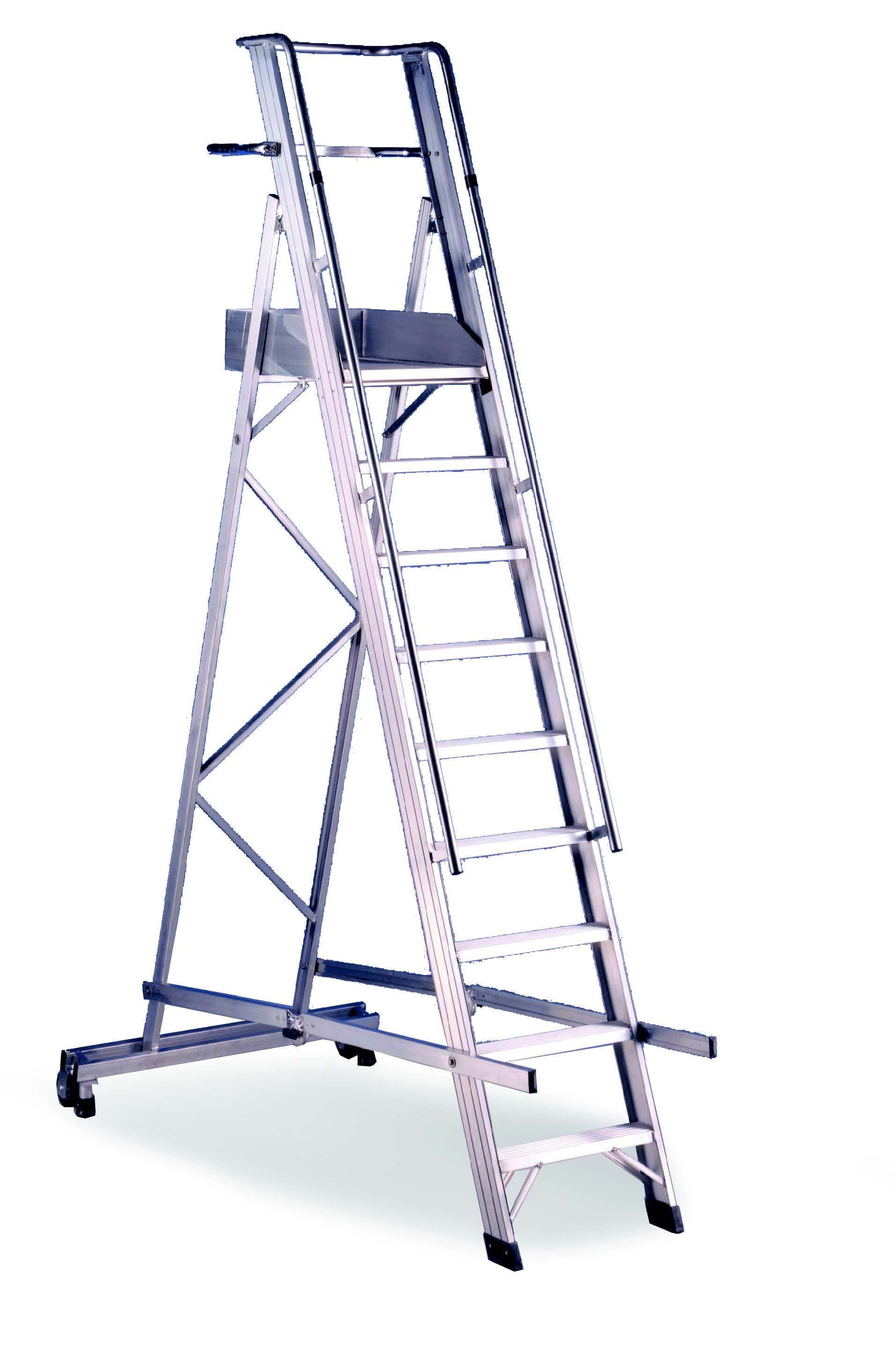
Up to a step height of around 0.5 m, a certified step stool or the MiniGemma platform is enough; for shelving up to 3–4 m choose a stair platform (Orsa Minore with a platform up to 2.8 m, Orsa Maggiore up to 3.9 m). Archive rooms, office storage areas, logistics centres, libraries, pharmacies and smaller production facilities – these are environments where work at height typically takes place between 0.5 and 3 metres. The heights are not dramatic, but falls from these levels can still cause serious injury.
Yet these are also the environments where improvisation is most common: a delivery crate, an office chair on castors, an unstable folding stool from a hardware shop. These improvised solutions are dangerous, and an employer should not allow them in the workplace.
This article explains which certified archive and warehouse step stools and which warehouse platform suit these heights, how they differ from each other, and how to select the right product for your operation.
Why Low Heights Must Not Be Underestimated
A large share of falls happen from heights of up to 3 m. A fall from 1.5–2 metres onto a hard floor can cause fractures, spinal injuries or head trauma.
From a legal standpoint, the employer's obligation to provide safe equipment for work at height applies regardless of whether the height is 1 metre or 10 metres. Under Czech law the employer must provide safe work equipment (Act No. 309/2006 Coll., Government Regulation No. 378/2001 Coll.); a crate or an office chair does not qualify.
A certified step stool or low platform significantly reduces this risk and is easy to defend at an inspection or in the event of an insurance claim.
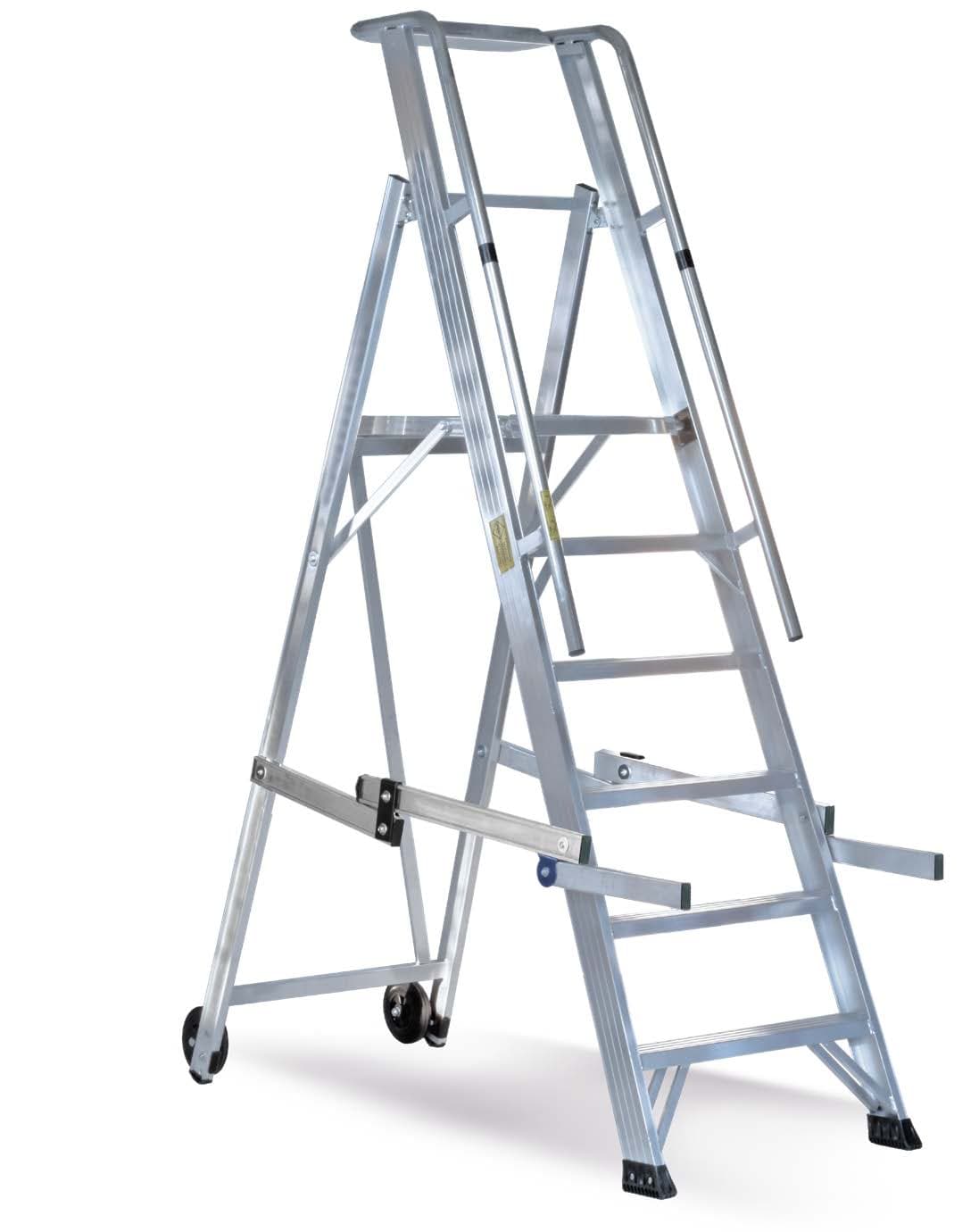
Overview of Available Products by Height
Category 1: Step stools (one or two steps)
For tasks where one or two steps up are enough – for example reaching the top shelf of a lower racking unit or an upper archive shelf – certified step stools are appropriate.
Step stools are covered by EN 14183. Products certified to it are a safe and defensible alternative to unstable improvised solutions.
Category 2: Low platform with 360° protection (platform height 0.25–0.50 m)
Where work at shelving takes place at working heights of up to about 2.5 m and the user moves around a lot, a low platform with guardrails all round is a better choice than a step stool.
COSMOS MiniGemma: a compact platform with 360° protection, originally designed for working at supermarket shelving (see our article on access solutions for supermarkets). Platform height 0.25 m (1 step) or 0.50 m (2 steps), working height 2.25 or 2.50 m. A footprint of just 56 × 63 cm or 56 × 78 cm and a weight of 13–14 kg. Built to the French E.M.E.R. standards, load capacity 150 kg.
Key features:
- 360° protection (100 cm guardrail on all four sides)
- 2 or 4 spring-loaded swivel castors (2WD / 4WD versions) – the platform locks itself under load
- Very lightweight, can be moved in any direction
- Compact footprint for narrow aisles
- Tool tray (15 kg capacity)
Category 3: Stair platforms (platform height 1.0–3.9 m)
For taller racking and archive shelving, stair platforms with guardrails are appropriate. They provide greater stability and a more comfortable climb than a ladder or step stool.
COSMOS Orsa Minore: a folding stair ladder with a 45 × 50 cm platform, 80 cm guardrail and handrail. Platform height 1.00–2.80 m depending on the number of steps (4–12), working height 3.00–4.80 m. It opens and folds in a few seconds, is 28 cm thick when folded and weighs 15.8–29 kg. Standard EN 131, load capacity 150 kg.
Key features:
- Lightweight and folding – no assembly required
- 45 × 50 cm platform with 80 cm guardrail
- 150 mm PVC transport wheels for easy repositioning
- 25 cm step pitch, 8 cm flat steps
- Standard EN 131
COSMOS Orsa Maggiore: a larger stair platform for warehouses, logistics centres and archives with taller racking. Platform 54 × 54 cm, platform height 1.07–3.90 m (4–15 steps), working height 3.07–5.90 m. 1 m guardrail with 10 cm toe board, automatic braking system. Standard EN 131, load capacity 150 kg.
Key features:
- Larger working area than the Orsa Minore
- Ergonomic step access
- 1 m guardrail and 10 cm toe board on the working platform
- Automatic braking system, 4WD version on request
- Standard EN 131
How to Select the Right Product for Your Operation
Selection depends on three key parameters.
By maximum access height:
- One or two steps → certified step stool or MiniGemma (platform 0.25–0.50 m, working height up to 2.50 m)
- Platform 1.0–2.8 m (working height up to 4.8 m) → Orsa Minore
- Platform up to 3.9 m (working height up to 5.9 m) → Orsa Maggiore
By how often the product is repositioned:
- Moved every few minutes → MiniGemma (lightweight, on castors, locks itself under load)
- Moved several times per shift → Orsa Maggiore with automatic brake
- Carried between rooms or floors → Orsa Minore (folding, with transport wheels)
By aisle width and available space:
- Narrow aisles → MiniGemma (56 cm wide footprint)
- Medium aisles → Orsa Minore (footprint 80–94 cm wide depending on height)
- Wider spaces and taller racking → Orsa Maggiore (footprint from 1.01 × 1.32 m to 1.50 × 2.95 m depending on height)
What to Check When Choosing Step Stools and Platforms
Step stools are covered by EN 14183, COSMOS stair platforms by EN 131. When choosing and inspecting them, check above all:
- the load capacity stated by the manufacturer (150 kg for the COSMOS models above)
- stability and anti-slip steps and platform
- the manufacturer's mark, load capacity and standard on the product
- the declaration of conformity with the standard and the user manual
Uncertified office chairs, plastic delivery crates or wooden stools do not meet these requirements – even if they appear stable in practice.
Practical Recommendations for Archives, Warehouses and Logistics
Equip each department or work zone: the distance to the nearest access equipment must not tempt employees to improvise. We recommend having a certified step stool or platform in every zone where work is carried out with racking or archive shelving.
Prohibit improvised alternatives: a formal instruction from a line manager or a health and safety policy prohibiting the use of uncertified tables, chairs or crates as access equipment is simple and effective. Back it up with the availability of certified products – employees improvise when they have no alternative.
Train employees: even a simple step stool requires basic instruction – how to position it, how to step on it, what must not be done. Document the training.
Carry out regular visual inspections: step stools and platforms subject to daily use wear over time. A cracked leg, a loose joint or a damaged anti-slip surface is a defect that must be addressed immediately.
Summary
For working at height in a warehouse, archive or logistics centre, there are certified products for every need – from the compact MiniGemma and the folding Orsa Minore to the Orsa Maggiore with platforms up to 3.9 m. Selection depends on access height, frequency of repositioning and available space.
Need help choosing the right product or a quote for equipping an entire facility? Contact us.
Sources
- EN 131 Ladders (parts 1–7: terms, requirements, testing, instructions, mobile platforms)
- COSMOS s.n.c., Albese con Cassano (IT) – cosmos-scale.it
This text was drafted by artificial intelligence from the sources listed and was reviewed and approved by an INTRAPOL employee before publication. Technical data matches the manufacturers' catalogues and manuals as of the publication date.